




Grafana Ideal Customer Profile: Who Actually Buys Grafana and Why It Matters for GTM Teams
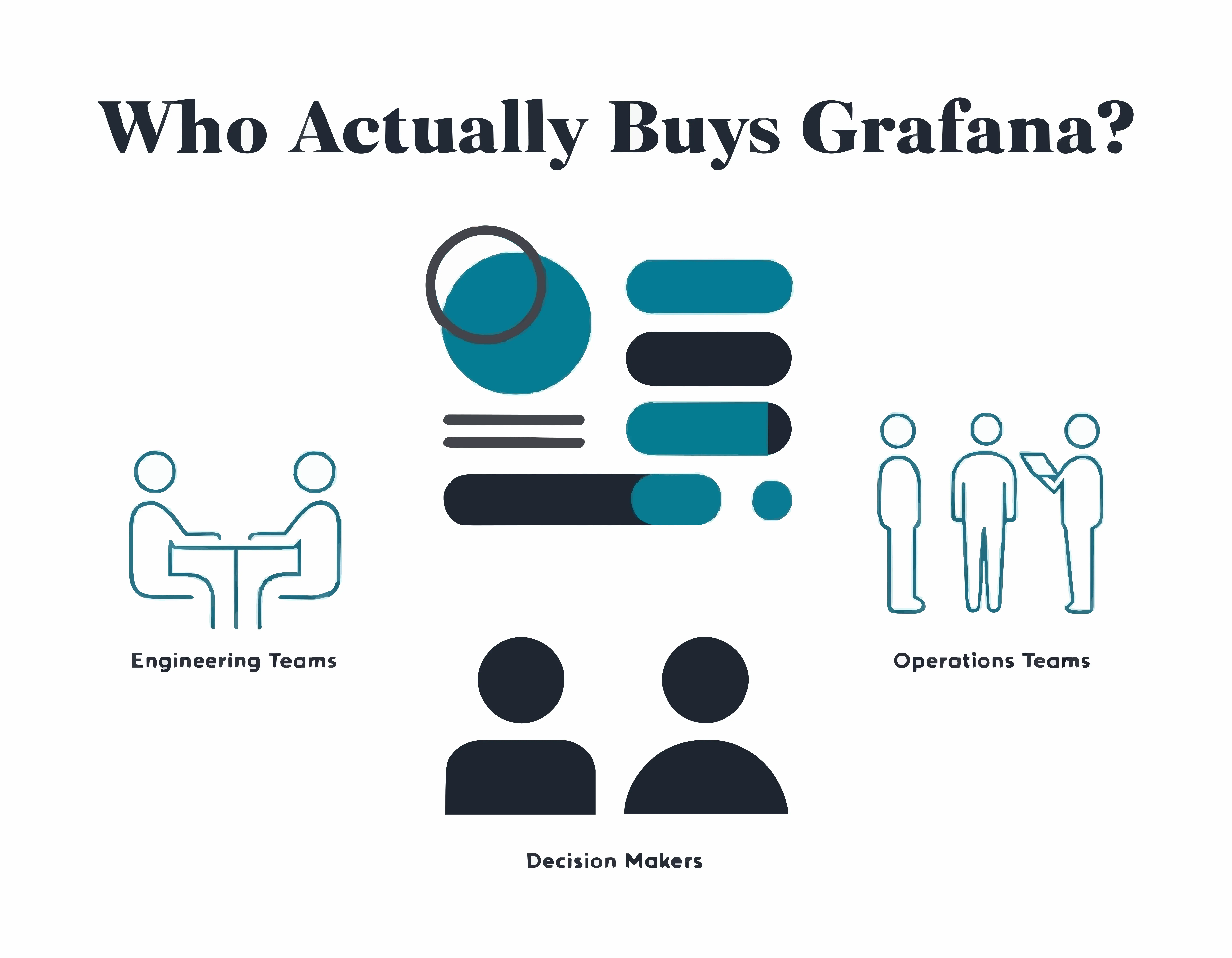
Grafana has grown into one of the world's most widely adopted observability platforms, with more than 35 million users globally. But usage alone doesn't indicate buying potential. Thousands of developers use the open-source version every day without ever becoming enterprise customers.
What separates a Grafana buyer from a Grafana user is infrastructure complexity, operational scale, and the need for centralised observability.
A fast-growing SaaS company managing Kubernetes clusters across multiple cloud environments is significantly more likely to invest in Grafana. Most probably, a larger organisation running a relatively simple infrastructure won't be the right prospect.
That's why understanding the Grafana ideal customer profile is critical for GTM teams. Instead of targeting broad technology segments, successful teams identify organisations that have both the technical need and organisational readiness to adopt Grafana at scale.
This blog breaks down who buys Grafana, the technologies they use, the people involved in purchasing decisions, and the signals that indicate buying readiness.
What Is a Grafana Ideal Customer Profile?
A Grafana ICP defines the type of organisation most likely to adopt, expand, or invest in Grafana's commercial offerings.
The distinction matters because not every Grafana user becomes a paying customer. Developers frequently deploy Grafana Open Source for personal projects or team-level monitoring.
However, enterprise buyers evaluate Grafana as a strategic observability platform that supports reliability, performance monitoring, and operational visibility across the business. For GTM teams, understanding these characteristics is essential when building a high-quality Grafana customer list, as not every organisation using Grafana represents a viable commercial opportunity.
To build Ideal Customer Profile similar to Grafana, you'll have to include organisations that:
- Operate cloud-native or hybrid-cloud environments
- Manage large volumes of metrics, logs, and traces
- Require visibility across multiple systems and teams
- Have dedicated DevOps, SRE, or platform engineering functions
- Are actively investing in infrastructure modernisation
The goal isn't to identify companies that could use Grafana. It's to identify companies that need observability at scale and have the resources to invest in it.
What are the Key Grafana ICP Criteria?
While many organisations use monitoring tools, only a specific subset aligns closely with Grafana's strengths.
Understanding these characteristics helps GTM teams move beyond broad targeting. It helps you focus on accounts that have both the operational need and organisational maturity to adopt observability solutions at scale.
The table below summarises the most important Grafana ICP criteria.
| ICP Factor | Ideal Characteristics |
|---|---|
| Company Size | 200+ employees |
| Growth Stage | Series B+, Mid-Market, Enterprise |
| Infrastructure | Multi-cloud environments, Kubernetes, Distributed Systems |
| Engineering Team | DevOps, SRE, Platform Engineering |
| Cloud Adoption | AWS, Azure, Google Cloud |
| Monitoring Needs | High-volume metrics, logs, traces, and application monitoring |
| Buying Readiness | Infrastructure modernisation, cloud migration, observability initiatives |
Company Size and Growth Stage
Grafana adoption tends to increase as organisations scale infrastructure and engineering operations. Mid-market companies, fast-growing startups, and enterprises often face monitoring complexity that requires centralised observability.
Infrastructure Complexity
One of the strongest Grafana ICP criteria is infrastructure complexity. Organisations managing multiple applications, cloud environments, and distributed workloads typically require deeper visibility into performance and reliability.
Engineering Team Maturity
Companies with dedicated DevOps, SRE, and platform engineering teams are often better positioned to operationalise Grafana and drive adoption across the organisation.
Which Industries are Most Likely to Adopt Grafana?
While industry alone doesn't define ICP fit, certain sectors consistently show higher Grafana adoption.
SaaS Companies
SaaS providers depend on uptime, application performance, and customer experience. Grafana helps engineering teams monitor services, APIs, and cloud infrastructure in real time.
Financial Services and FinTech
FinTech companies require visibility into transactions, application performance, and system reliability. Even small outages can have significant financial consequences.
Telecommunications
Telecom providers operate highly distributed infrastructure and require continuous visibility into network performance and service availability.
E-commerce Businesses
Traffic spikes, checkout performance, and customer experience directly impact revenue. Grafana helps teams monitor critical systems during peak demand periods.
Enterprise IT Organizations
Large enterprises often use Grafana to centralise monitoring across business units, cloud environments, and infrastructure teams.
What are the Technographic Signals That Indicate Grafana Readiness?
Firmographic data helps identify who a company is, but technographic intelligence reveals how it operates. In many cases, the technologies an organisation uses are stronger indicators of Grafana adoption than industry or company size alone.
The following technologies frequently appear in environments where observability has become a business-critical function.
| Technology | Why It Matters |
|---|---|
| Kubernetes | Creates complex monitoring and observability requirements |
| Prometheus | Native Grafana integration and a common observability stack component |
| OpenTelemetry | Indicates observability standardization and telemetry maturity |
| AWS / Azure / GCP | Signals cloud-native infrastructure and monitoring needs |
| Docker | Demonstrates container adoption and infrastructure modernization |
| Terraform | Indicates infrastructure automation and DevOps maturity |
Kubernetes
Kubernetes remains one of the strongest indicators of Grafana readiness. As containerised environments grow, monitoring becomes more complex, increasing the need for centralised dashboards and observability.
Prometheus and OpenTelemetry
Organisations using Prometheus and OpenTelemetry are often actively investing in modern observability practices. These technologies frequently coexist with Grafana deployments and indicate a higher likelihood of adoption.
Cloud and Automation Technologies
Cloud platforms such as AWS, Azure, and Google Cloud, along with tools like Docker and Terraform, signal a mature infrastructure environment where Grafana can deliver significant operational value.
Key takeaway: For GTM teams, technographic signals often provide the clearest path to identifying Grafana-ready accounts before they actively enter the buying cycle.
Who Influences Grafana Buying Decisions?
Grafana purchases typically involve multiple stakeholders rather than a single decision-maker. And these decision-makers are:
- CTO: The CTO evaluates strategic alignment, long-term scalability, and the role observability plays within the broader technology roadmap.
- VP of Engineering: Engineering leaders assess reliability, operational efficiency, and the business impact of observability investments.
- DevOps Leaders: DevOps teams evaluate integrations, workflows, automation capabilities, and operational effectiveness.
- SRE Managers: SRE teams are often among the primary users of Grafana and play a major role in platform evaluation and adoption.
- Platform Engineering Teams: Platform teams frequently act as internal champions responsible for standardising observability practices across the organisation.
Understanding the complete buying committee helps GTM teams create more effective account-based engagement strategies.
What are the High-Intent Buying Signals GTM Teams Should Track?
The best prospects rarely announce that they're ready to buy. They leave signals such as:
- Hiring Activity: Organisations hiring DevOps engineers, SREs, cloud architects, or platform engineers are often investing in infrastructure modernisation and observability capabilities.
- Multi-Cloud Initiatives: As organisations expand across multiple cloud environments, centralised visibility becomes increasingly important.
- Funding and Growth Events: Series B and later-stage funding rounds often trigger infrastructure investments, engineering expansion, and platform evaluations.
- Observability Research Activity: Accounts actively researching monitoring platforms, comparing observability vendors, or engaging with Grafana-related content often indicate active buying intent.
The strongest opportunities usually emerge when multiple signals appear simultaneously.
How GTM Teams Build a Grafana Target Account List?
Building a high-quality Grafana target account list requires layering multiple forms of intelligence.
Step 1: Apply Firmographic Filters
Start with company size, revenue, geography, and growth stage to define your target market.
Step 2: Layer Technographic Data
Identify organisations using Kubernetes, Prometheus, OpenTelemetry, Docker, AWS, Azure, or Google Cloud.
Step 3: Add Intent Signals
Prioritise accounts actively researching observability platforms or evaluating infrastructure modernisation initiatives.
Step 4: Map the Buying Committee
Identify engineering leaders, DevOps managers, SRE leaders, and platform engineering stakeholders within each account.
Combining these layers creates a more accurate picture of adoption likelihood than any single data source alone.
Conclusion
The most successful GTM teams understand that Grafana adoption is driven by infrastructure maturity rather than industry alone.
Organisations with cloud-native environments, distributed systems, growing engineering teams, and advanced observability requirements are far more likely to invest in Grafana than companies with simpler operational needs.
Understanding the Grafana ideal customer profile, identifying the right Grafana ICP criteria, and monitoring technographic and intent signals allows teams to focus resources on accounts with the highest likelihood of conversion.
Instead of targeting every cloud company, focus on organizations where observability has become a business-critical requirement. That's where the strongest Grafana opportunities exist.
Frequently Asked Questions
What is the Grafana ideal customer profile?
The Grafana ideal customer profile includes organizations with cloud-native infrastructure, distributed systems, mature engineering teams, and advanced monitoring requirements.
Which industries commonly use Grafana?
SaaS, FinTech, telecommunications, e-commerce, and enterprise IT organizations are among the most common Grafana adopters.
What technologies indicate Grafana readiness?
Kubernetes, Prometheus, OpenTelemetry, AWS, Azure, Google Cloud, Docker, and Terraform are strong indicators of Grafana adoption potential.
Who typically buys Grafana?
CTOs, VP Engineering leaders, DevOps managers, SRE teams, and platform engineering leaders are typically involved in Grafana purchasing decisions.
What are the strongest Grafana buying signals?
SRE hiring, DevOps expansion, Kubernetes adoption, cloud modernization initiatives, funding events, and observability research activity are among the strongest buying signals.