




What Is Data-Driven Marketing? How to Build a Data-Driven Marketing Strategy
Owen ran marketing for a mid-sized home goods brand, and for two years, campaign decisions came down to whoever argued most convincingly in the Monday meeting. One team wanted more Instagram spend because "engagement felt strong."
Another pushed for a new email series because a competitor had just launched one. Nobody could say with any confidence which channel was actually driving revenue, because nobody was looking at the same numbers to answer that question.
Six months after Owen forced the team to build every decision around a shared data model instead of instinct, budget allocation looked completely different — and so did results. This is what data-driven marketing actually looks like once it moves past being a buzzword: fewer arguments about whose gut feeling is right, and more decisions grounded in what the numbers actually show.
Key Takeaways
- Data-driven marketing bases decisions on measurable customer behavior and performance data, not assumptions or opinions
- Strong programs combine customer, behavioral, channel, attribution, and historical data rather than relying on one layer
- Multi-touch attribution often reveals channel value that last-click tracking misses entirely
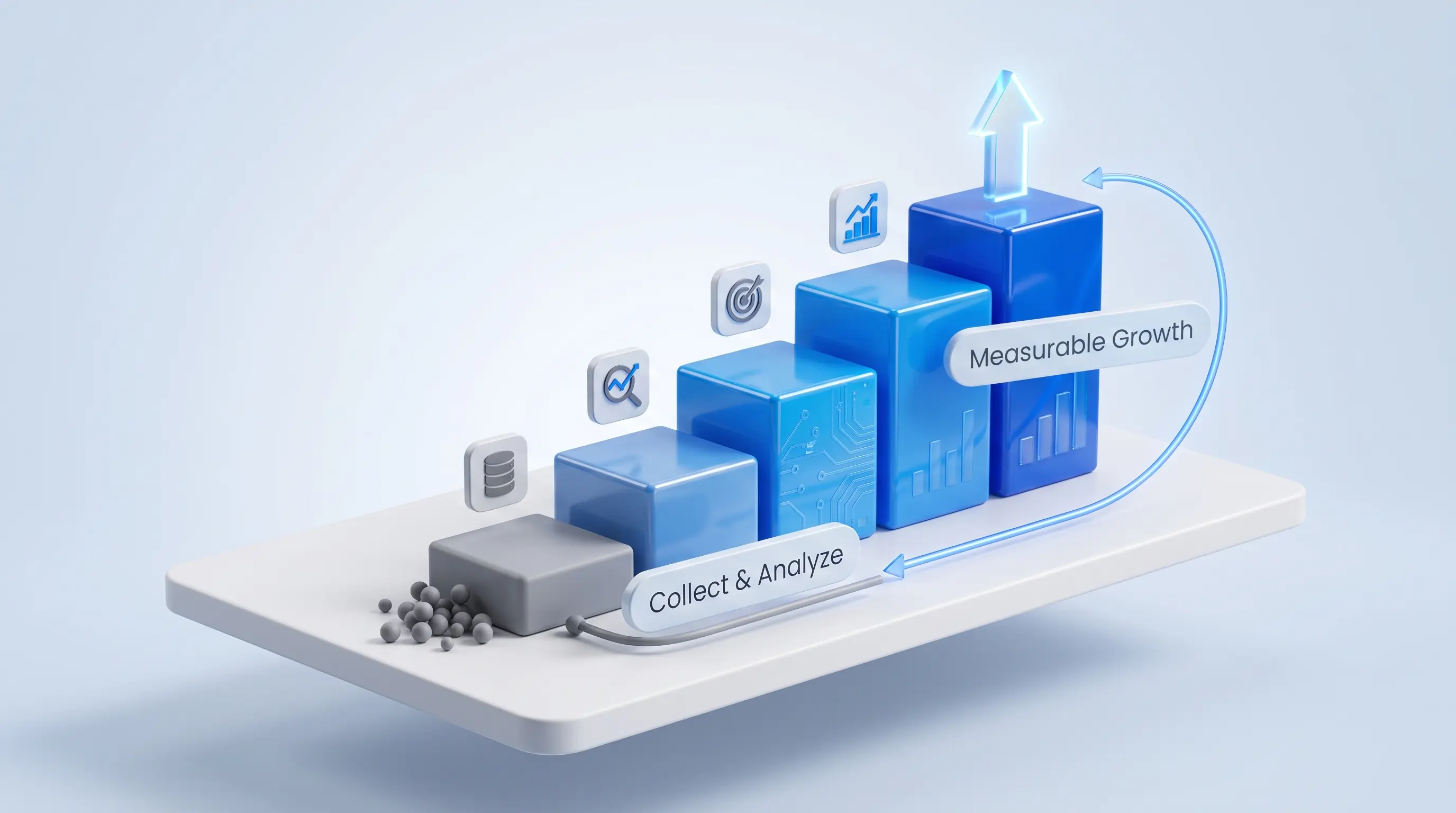
- Building the strategy is a repeatable process: define metrics, centralize data, build attribution, segment by behavior, test, and refine
- A data-driven approach still needs human judgment and creativity; data informs decisions, it doesn't replace strategic thinking
What Is Data-Driven Marketing?
It's an approach where marketing decisions — channel investment, messaging, targeting, timing, and budget allocation — are based on measurable data and customer behavior, rather than assumptions, precedent, or whoever's opinion carries the most weight in the room.
This doesn't mean removing creativity or judgment from marketing. It means giving that judgment better evidence to work from. A data-driven marketing approach still needs strong creative and strategic thinking; the data tells you where to point it.
The Core Data Layers Behind the Strategy
| Data Layer | What It Reveals | Example Application |
|---|---|---|
| Customer data | Who are your actual customers, beyond assumptions | Refining audience segments based on real purchase behavior |
| Behavioral data | How people interact with your marketing and product | Identifying which content or touchpoints precede a purchase |
| Channel performance data | Where marketing spend actually converts | Reallocating budget away from underperforming channels |
| Attribution data | Which touchpoints contributed to a conversion | Understanding the real path to purchase, not just the last click |
| Historical campaign data | What's worked and failed in the past | Avoiding repeated mistakes and doubling down on proven patterns |
Most mature data-driven marketing programs pull from several of these layers together, since any single one gives an incomplete picture on its own.
Why Data-Driven Marketing Outperforms Instinct-Based Marketing?
Owen's team illustrates the core issue with relying on gut feeling: it doesn't scale, and it's genuinely hard to argue with or learn from. A strong instinct about which channel is working is often based on partial, recent, or emotionally salient information — from the campaign someone personally worked on, the channel that "feels" trendy, or the metric that's easiest to check.
When Owen's team finally pulled attribution data across a full year, they found something nobody had guessed: email, which everyone considered the "boring, declining" channel, was quietly influencing more final purchases than any single social platform, just rarely as the last touchpoint before checkout, which is what everyone had been informally crediting. That single finding reshaped budget allocation more than any creative pitch that quarter.
How to Build a Data-Driven Marketing Strategy
Here's a step-wise guide to creating an effective and efficient data-driven marketing strategy:
Step 1: Define What You're Actually Trying to Measure
Before collecting more data, get specific about which business outcomes matter: revenue, customer lifetime value, retention, rather than defaulting to easy-to-track vanity metrics like impressions or likes.
Step 2: Audit and Centralize Existing Data
Most marketing teams already have more usable data than they realize, scattered across a CRM, an ad platform, an email tool, and web analytics that don't talk to each other. Centralizing it, even imperfectly, is more valuable than acquiring a new tool before this step is done.
Step 3: Build a Real Attribution Model
Understand which touchpoints actually contribute to a purchase, not just which one happened last. Owen's email discovery only surfaced because his team moved past last-click attribution to look at the full customer journey.
Step 4: Segment Based on Behavior, Not Assumptions
Rather than defining audience segments from demographic guesses, build them from actual purchase and engagement patterns of customers who behave similarly, not just the ones who look similar on paper.
Step 5: Test, Measure, and Reallocate
Use the data to run structured tests of messaging, channel mix, timing, and let performance data, not opinion, decide what gets more budget going forward.
Step 6: Review and Refine on a Regular Cadence
A data-driven marketing strategy isn't static. Owen's team reviews attribution and channel performance quarterly, since customer behavior and channel effectiveness both shift over time.
Data-Driven Marketing Strategy vs. Traditional Marketing
| Factor | Traditional Approach | Data-Driven Approach |
|---|---|---|
| Budget decisions | Based on precedent or the loudest opinion | Based on measured channel and campaign performance |
| Attribution | Often last-click or untracked entirely | Multi-touch, reflecting the real customer journey |
| Audience targeting | Based on demographic assumptions | Based on actual behavioral and purchase patterns |
| Campaign evaluation | Vanity metrics (likes, impressions) | Business outcomes (revenue, retention, LTV) |
| Adjustment speed | Slow, often only at quarterly planning | Continuous, based on ongoing performance data |
Common Mistakes When Building a Data-Driven Marketing Strategy
- Collecting data without a clear question to answer. Data without a defined business outcome in mind just becomes noise that nobody has time to interpret.
- Relying on last-click attribution alone. It systematically undervalues channels, like email and content, that influence a purchase without being the final touchpoint.
- Treating this as a one-time dashboard project. A data-driven approach needs ongoing review and adjustment, not a single setup that runs unchanged for years.
- Ignoring data quality. Decisions built on inconsistent or poorly tracked data can be worse than no data at all, since they carry false confidence.
- Removing human judgment entirely. Data should inform strategic and creative decisions, not replace the thinking behind them.
Conclusion
Owen's team didn't get better at marketing by spending more; they got better by finally agreeing on what the data actually showed, instead of letting the most convincing voice in the room win the budget argument.
Building a data-driven marketing strategy isn't about drowning in dashboards; it's about consistently grounding decisions in real customer behavior, even when it contradicts what everyone assumed was working.
Frequently Asked Questions
What is data-driven marketing?
It's a marketing approach where decisions about channels, messaging, targeting, and budget are based on measurable customer data and performance, rather than assumptions or instinct.
How is a data-driven marketing strategy different from just using analytics?
Analytics tools collect and display data. A data-driven marketing strategy actively uses that data combined with proper attribution and behavioral segmentation to guide real budget and messaging decisions.
What's the biggest mistake teams make with data-driven marketing?
Relying on last-click attribution, which undervalues channels that influence a purchase earlier in the journey without being the final touchpoint before checkout.
Do you need expensive tools to build a data-driven marketing approach?
Not necessarily. Centralizing and properly interpreting data you already have often matters more than acquiring new tools, especially in the early stages of building the strategy.
How often should a data-driven marketing strategy be reviewed?
Quarterly is a reasonable baseline for most teams, since customer behavior, channel performance, and attribution patterns can shift meaningfully over just a few months.