




B2B Lead Generation Trends: Key Trends and Insights for 2026
Revenue leaders walked into 2026 with a harder problem than they had a year earlier. Buyers now complete most of their research before a seller ever enters the picture, and a recent Gartner survey found that 61% of B2B buyers actively prefer a rep-free buying experience when evaluating a new solution.
That shift changes what actually works. The B2B lead generation trends shaping 2026 all trace back to one requirement: accurate, well-targeted data that lets a team show up at the right account with the right context, instead of chasing volume and hoping some of it converts.
Technographic and Intent Data Are Replacing Guesswork
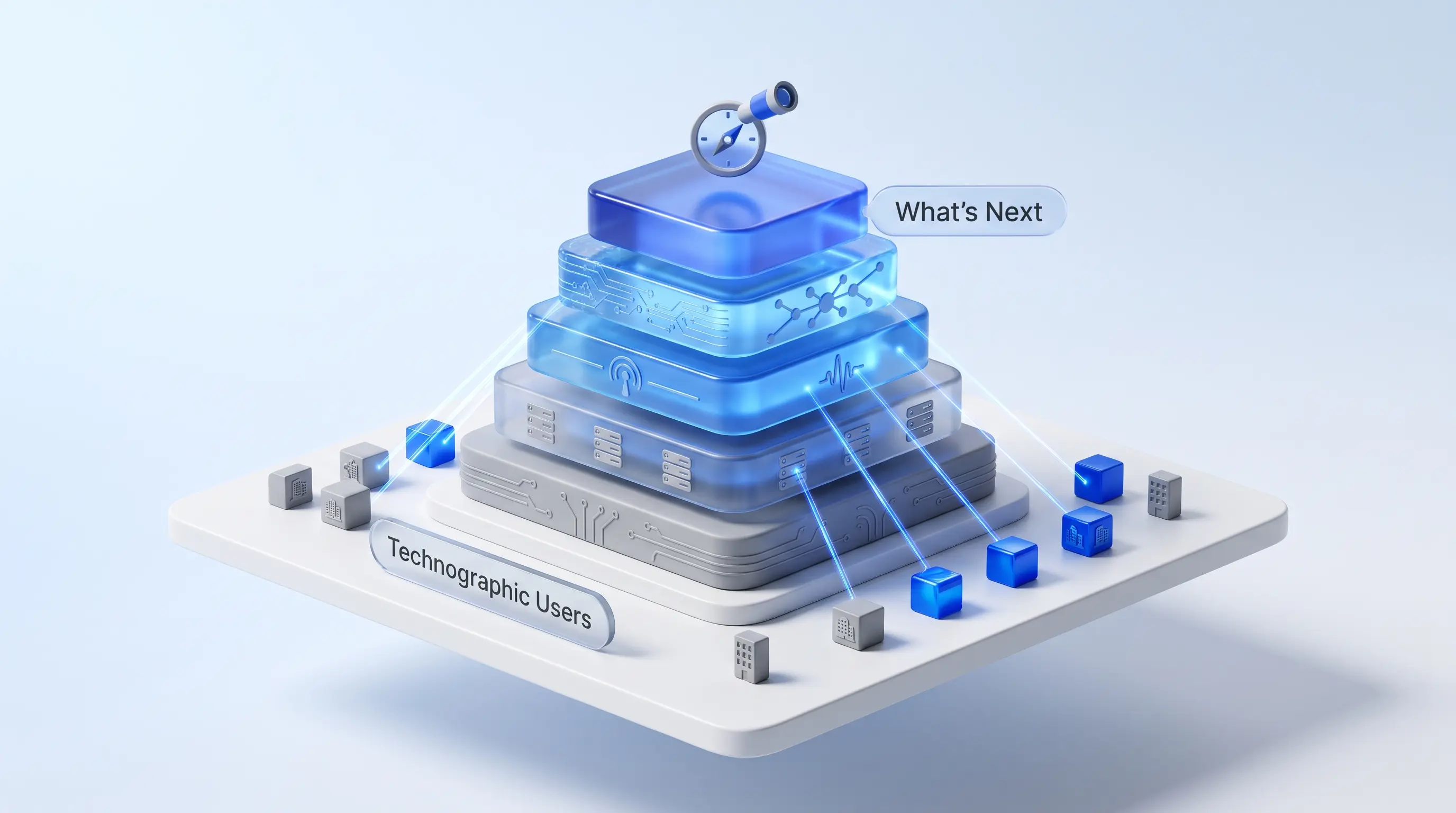
Firmographic filters alone, including industry, headcount, and revenue band, get a campaign into the right general territory and stop there. Technographic data closes the remaining gap by showing which platforms and tools a target account already runs, which turns a cold pitch into a relevant, specific conversation from the first message.
A revenue team that understands that a prospect uses a competing or complementary tool can tailor an outreach message around displacement or integration rather than a generic feature list. DCM's technographic data coverage spans more than 30,000 technologies across 25 million companies, which gives GTM teams a factual starting point rather than an assumption about what a prospect's stack looks like.
Want outreach built on what a prospect's stack actually looks like, not a guess? Get a technographic list from DCM built to your exact ICP.
Talk to SalesBuyers Are Deciding Before Sales Ever Gets a Call
The buying process itself has moved earlier and faster than it was even two years ago. Gartner's 2025 research on rep-free buying found that most B2B buyers now treat digital self-service as their default path and only bring in a seller once they already have a shortlist in mind.
That timeline shift means a lead generation program built around volume alone arrives too late to be effective. Teams that win in 2026 are the ones using intent data and account-level signals to identify who is actively researching right now, so outreach lands while the buying window is still genuinely open rather than after the decision has effectively been made.
AI-Assisted Personalization Only Performs as Well as the Data Behind It
Generic cold outreach has stopped working, and most revenue teams already know it. AI-assisted personalization tools can now generate tailored subject lines, custom landing pages, and account-specific messaging at a scale no human team could match through manual work.
None of that personalization matters if the underlying contact record is wrong. A perfectly tailored email sent to an outdated title or a bounced address produces the same result as no personalization at all, which is why data accuracy has become the real bottleneck behind every AI-driven outreach program, not the creative layer sitting on top of it.
Multichannel Outreach Demands One Accurate Source of Contact Data
Email alone rarely breaks through anymore, so most B2B teams now combine email, LinkedIn, phone, and retargeting into a single coordinated sequence. Multichannel outreach increases the number of chances a message gets seen, but only when every channel is working from the same accurate underlying contact record.
A phone number that is three jobs out of date or an email address tied to someone who left the company six months ago does not just fail quietly. It wastes the rep's time across every channel in the sequence at once, which makes a single, verified source of contact data more valuable than any individual outreach channel on its own.
Clean, Compliant Data Has Moved From Nice-to-Have to Non-Negotiable
Contact data decay is not a hypothetical risk. Industry research consistently puts B2B contact data decay at roughly 2.5% per month, which compounds to about 30% every year, meaning a list left untouched for a year has already lost close to a quarter of its accuracy.
Compliance has gotten stricter too. The exemption that once excluded employment and business-to-business data from California's privacy law expired in 2023, and that information now falls under the same notice, access, and deletion obligations as consumer data under the California Attorney General's CCPA guidance. A data compliance gap is no longer a back-office issue; it is a direct legal exposure tied to every contact record a team buys or builds.
Revenue Growth Still Hinges on Sales and Marketing Alignment
None of the technical upgrades above matter much if sales and marketing are still working from separate target lists and separate definitions of a qualified lead. Sales and marketing alignment remains one of the clearest differentiators between B2B companies that hit their revenue targets and those that consistently miss them.
Forrester's research on customer-obsessed growth engines found that firms with strong alignment across customer-facing functions report 2.4 times higher revenue growth than firms without it. That gap does not come from better individual campaigns. This alignment comes from both teams using the same ideal customer profile (ICP) and the same accurate account data, so a lead that marketing qualifies is actually a lead that sales wants to work with.
Ready to trade broad lists for a verified, ICP-matched one? Tell DCM the accounts, technologies, and regions you want to reach.
Book a DemoFrequently Asked Questions
What is the biggest B2B lead generation trend for 2026?
Precision over volume. The clearest B2B lead generation trends this year all point toward smaller, better-targeted lists built on technographic and intent data instead of broad outreach to loosely qualified contacts.
How does technographic data improve lead generation results?
It replaces guesswork with facts about a prospect's actual tech stack. That lets outreach reference specific tools or integration gaps, which consistently performs better than generic messaging based on industry and company size alone.
Why does contact data decay matter for a lead generation program?
Because stale data wastes effort across every channel at once. At roughly 2.5% monthly decay, an unmaintained list loses accuracy fast enough that campaigns built on it start at a disadvantage before the first message goes out.
How does sales and marketing alignment affect lead generation outcomes?
Misaligned teams chase different definitions of a good lead, which wastes pipeline on both sides. Aligned teams share one ICP and one data source, whose research ties directly to faster revenue growth.