



How & When to Outreach my Competitor's Client?
Every B2B sales and marketing team has looked at a competitor's client list and thought the same thing: "Those should be our customers."
And sometimes, they're right. Competitor clients aren't loyal by default; they're loyal until something better comes along, or until the product they're using stops working for them. The question isn't whether to reach out. It's how to do it intelligently, and when.
That's where technographics data comes in.
What Are Technographics and Why Do They Matter Here?
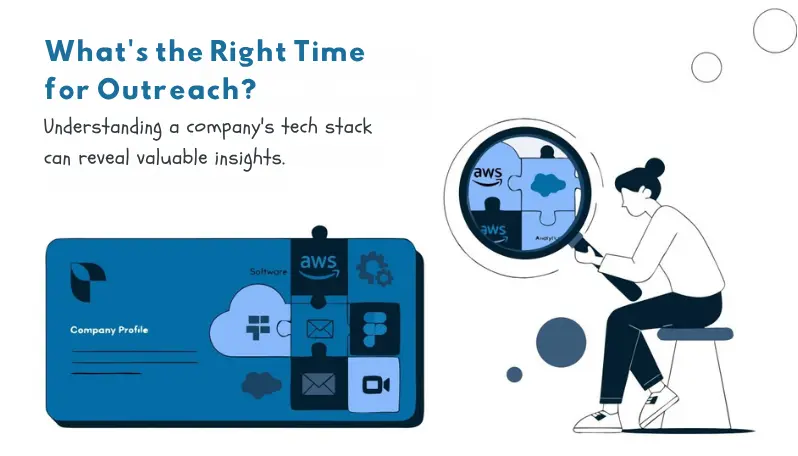
Technographics is data that tells you which technologies a company is currently using in its CRM, marketing stack, security tools, and data infrastructure. Think of it as a window into how a business actually operates.
It helps you see exactly which companies are running your competitor's product, how long they've likely been using it, and what else is in their stack. Most importantly, when layered with intent data signals, you can determine whether they are open to a sales pitch.
That last part is what we need, right? Conversion is the aim.
When Should You Reach Out to a Competitor's Customers?
Timing matters more than most outbound teams think. Reach out too early, before a prospect is actively evaluating change, and even a well-written pitch is likely to be ignored.
In B2B software buying, urgency and timing consistently outperform message quality alone. One study found that 52.8% of software buyers respond to cold outreach because it solves a top-of-mind problem, making buyer readiness the biggest driver of engagement, not the pitch itself.
So what does a buying trigger actually look like? Here are the most reliable ones:
- Stack changes: If a company has recently dropped a tool that integrated with your competitor's product, their existing setup may be under review. Technographic data picks this up faster than any outbound list.
- Funding rounds: A Series B or C raise almost always means a tech stack audit is coming. New leadership, new growth targets, new vendors. Get in front of them before your competitor renews.
- Leadership changes: A new CTO, VP of Sales, or Head of Marketing rarely inherits the previous person's stack without question. This is one of the highest-intent buying signals in B2B, and it's hiding in plain sight on LinkedIn.
- Company growth signals: Rapid hiring in a specific function, say, a company suddenly posting ten sales roles, suggests the tools supporting that function are about to be stress-tested. If your competitor's product has known weaknesses at scale, now is the time to show up.
- Renewal windows: Most SaaS contracts run on 12-month cycles. If you know when a company likely signed with your competitor, you can time your outreach for 60–90 days before renewal, right when they're evaluating whether to stay.
How to Reach Out to Competitor Customers Without Sounding Generic?
Knowing when to reach out is half the battle. Knowing what to say is the other half.
One of the biggest mistakes teams make when targeting competitor customers is opening with, "We're better than X." It feels defensive, sounds self-serving, and immediately puts prospects on guard. Most buyers don't want to be told they made the wrong decision.
Instead, lead with context. Show that you understand what may be changing in their environment.
A message that says "I noticed you're running [Competitor] and recently expanded your sales team significantly. We work with a lot of companies at that stage who find [specific limitation] starts to create friction" is a completely different conversation opener than "We're the leading alternative to [Competitor], want a demo?"
One shows intelligence. One shows a template.
A few principles that work:
- Be specific, not generic: Reference something real. Talk about their tech stack, growth signals, hiring patterns, business model, or industry context. Technographic and firmographic data help you personalise at scale without sounding intrusive.
- Respect the existing relationship: They chose your competitor for a reason. Acknowledge that and focus on where your approach differs rather than positioning yourself as universally better.
- Offer value before asking for time: Share something useful first: a benchmark, a relevant insight, a practical resource, or an observation tied to their situation. Earn interest before asking for a meeting.
- Keep it short: Competitor customers didn't ask to hear from you. The goal of the first message is not to close the deal. It's to earn the next conversation.
How to Build a Competitor Account List That's Worth Outreaching?
None of this works without the right accounts.
Identifying companies that already use a competitor is the starting point. But the lists that generate conversations aren't built by pulling every account running that tool. They're built by narrowing to companies where the fit is strong, and the timing makes sense.
That means layering multiple signals together:
- Technographic data to confirm current tool usage
- Firmographic filters to prioritise company size, industry, and growth stage
- Intent signals to identify active research or evaluation behaviour
- Trigger data to surface meaningful changes such as stack updates, leadership moves, expansion, or recent funding
Most standard B2B databases help with the first two.
The real advantage comes from combining all four layers. That's what helps teams move beyond "companies that use our competitor" to "companies that may actually be open to change."
Conclusion
Outreaching a competitor's client isn't about poaching. It's about showing up with the right message at the right moment for the right account. Do that well, and you're not a cold caller, you're a timely, relevant solution to a problem they're already starting to feel.
Technographics give you the intelligence to make that happen systematically, not just when you get lucky.
If you want to build a smarter outreach motion around competitor displacement, start by getting your data layer right. Everything else follows from there.
Frequently Asked Questions
1. Is targeting competitor customers a legitimate B2B growth strategy?
Absolutely. These accounts already understand the problem your product solves. Budget is allocated. The buying process is familiar. You're not creating awareness, you're offering a better alternative at the right moment. Done with the right timing and message, competitor displacement is one of the most efficient B2B growth strategies available.
2. When is the best time to reach out to competitor customers?
When something has changed. Funding rounds, leadership changes, and rapid hiring signal a stack review is coming. Competitor price increases or product outages create natural openings. Reaching out 60 to 90 days before a likely contract renewal is also highly effective. Timing is the whole game with competitor outreach.
3. What signals suggest a company may be ready to switch vendors?
Watch for negative review spikes on G2, leadership changes, or significant company growth that exposes tool limitations. Public complaints on social media are reliable signals too. Technographic data showing recently removed integrations can suggest the broader stack is under review. Any combination of these signals warrants a timely outreach.
4. How can technographic data improve competitor targeting?
You reach only accounts confirmed to be running a competitor's product. You can see what else is in their stack and whether your tools integrate. Recent stack changes signal an evaluation is underway. Outreach becomes more relevant, more timely, and significantly more likely to convert.
5. How do you build a high-intent competitor account list?
Start with technographic data to confirm competitor usage. Layer firmographic filters by size, industry, and growth stage to match your ICP. Add intent signals to find accounts actively researching your category. Then prioritise by trigger events, funding, hiring spikes, and negative reviews. The result is a focused, actionable list, not just a long one.