




How to Choose the Right Managed Service Providers that Suit Your ICP?
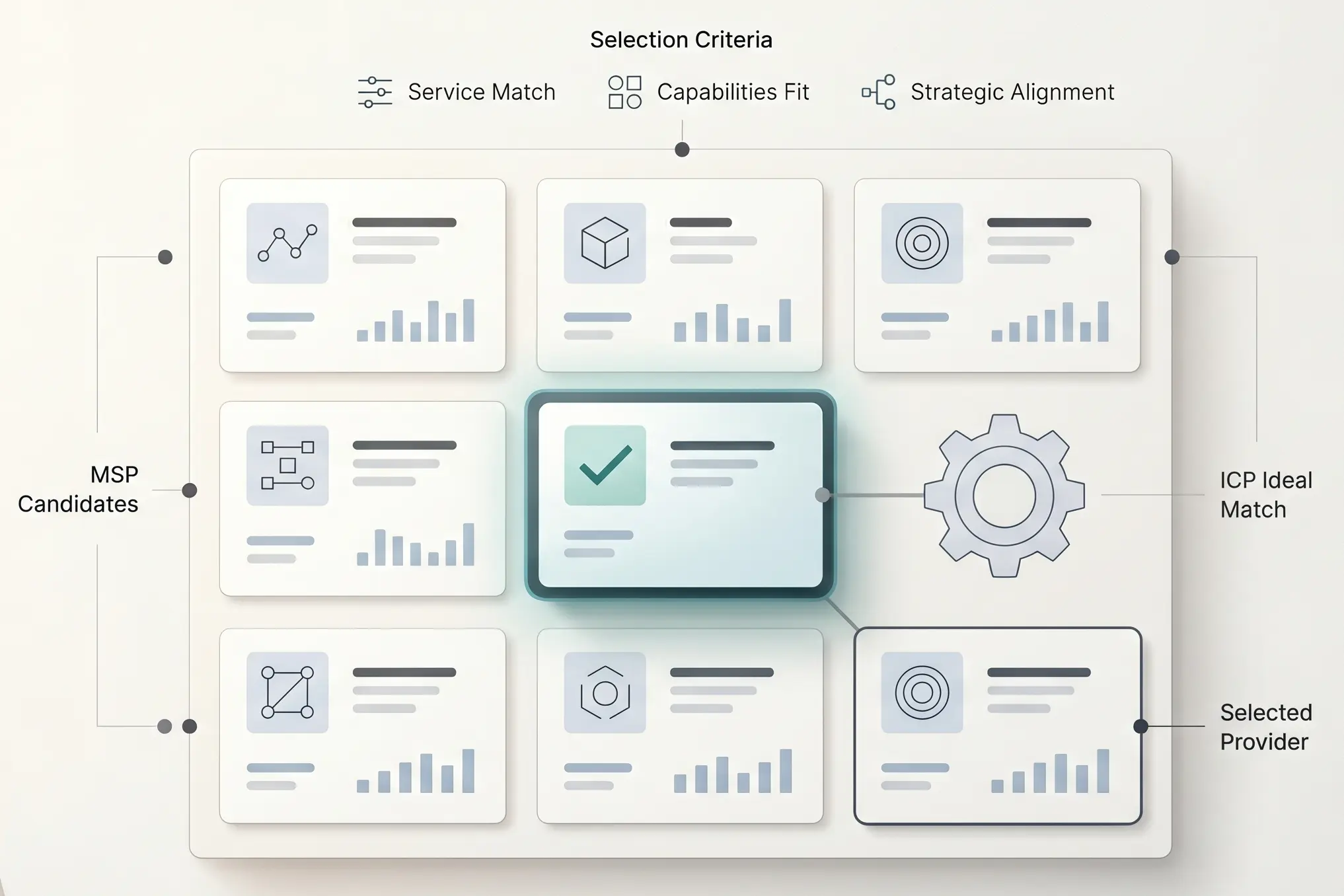
The global market for managed services is projected to reach $489.35 billion by the end of 2026, growing at a CAGR of over 20%. This represents a fundamental shift in how companies scale.
High-performing organizations with the right managed service providers report up to 25% gains in technician productivity and significantly lower operational overhead.
However, the "best" provider isn't a universal title. A provider that excels for a seed-stage startup will likely fail a global enterprise. To succeed, you must master the art of choosing a managed service provider that mirrors your ICP's maturity and technical complexity.
Summary
Choosing the right managed service provider requires aligning their technical tier, from reactive to strategic, with your organizational maturity.
Key factors to consider when choosing a managed services provider include industry-specific technographics, proactive security (MDR), and scalable SLAs. Selecting a partner that mirrors your Ideal Customer Profile (ICP) ensures technology drives growth rather than creating operational bottlenecks.
Who is a Managed Service Provider?
A managed service provider is a third-party company that remotely manages a customer's IT infrastructure and/or end-user systems. It typically functions on a proactive basis and under a subscription model.
Unlike traditional IT consultants who work on a project basis, an MSP assumes ongoing responsibility for the health and security of your technology environment.
What's the Managed Service Provider Classification Criteria?
Managed service providers are generally categorized into four tiers based on their service depth and operational maturity:
| Tier | Classification | Primary Focus | Suitable for |
|---|---|---|---|
| Tier 1 | Reactive (Break-Fix) | Fixing things when they break; basic installations. | Micro-businesses with minimal IT needs. |
| Tier 2 | Stable/Proactive | Standardized onboarding, remote monitoring, and patch management. | Growing SMBs requiring consistent uptime. |
| Tier 3 | Scalable/Value-Add | Cloud transformation, advanced cybersecurity, and strategic IT roadmapping. | Mid-market companies with complex compliance needs. |
| Tier 4 | Strategic Partner | Full-spectrum managed services, data analytics, and global infrastructure. | Large enterprises and global organizations. |
What are the Steps to Choose a Managed Service Provider (MSP)?
The goal of choosing a managed service provider is to shift from reactive firefighting to strategic scaling. Follow these eight steps to ensure your partner can sustain your long-term roadmap.
1. Audit Your Internal Technical Debt & ICP Requirements
Before looking outward, define your Ideal Customer Profile from a technical perspective. If your customers are enterprise-level banks, you need an MSP that understands high-stakes security. Map your current infrastructure, compliance gaps (GDPR, SOC2), and 3-year growth targets. This ensures you hire for where you're going, not just where you are.
2. Verify Industry-Specific Experience
What is a managed service provider worth if they don't understand your vertical? A generic MSP might struggle with the specific regulatory challenges of FinTech or the uptime demands of SaaS. Prioritize providers who can show a track record within your specific industry.
3. Evaluate the Tech Stack & Partnerships
A good managed service provider maintains deep partnerships with major vendors. Check their Technographic Fit, ensure their experts are certified in the tools your business relies on daily.
4. Inspect Cybersecurity & Compliance Frameworks
In 2026, security is the foundation of managed services. Move beyond "antivirus" talk and ask about:
- Managed Detection and Response (MDR): Proactive threat hunting.
- Identity Access Management (IAM): Critical for remote B2B workforces.
- Business Continuity: How fast can they restore your data if a breach occurs?
5. Review Service Level Agreements (SLAs) with a Business Lens
Don't just look at the uptime percentage (aim for 99.9%+). As a decision-maker, review the Response vs. Resolution times. A fast response is useless if the resolution takes 48 hours. Ensure there are clear escalation paths for critical "Mission-Critical" outages.
6. Assess Scalability and Flexibility
How to choose a managed service provider that becomes an asset, not a liability? Ask about their "Pay-as-you-grow" models. Your provider should be able to scale support from 50 employees to 500 without a complete infrastructure overhaul or prohibitive hidden fees.
7. Demand Transparency in Reporting
A proactive partner provides data, not just random claims. Ask for sample reports on:
- Ticket Trends: Are recurring issues being solved at the root?
- Asset Lifecycle: Which hardware/software is approaching end-of-life?
- Cloud Cost Optimization: Are you paying for resources you don't use?
8. Run a Trial Project or Proof of Concept (PoC)
Before signing a multi-year contract, test the cultural fit. Assign a small migration or security audit. Use this to evaluate their communication style, speed of delivery, and whether they operate as a vendor or a strategic partner.
How DCM Ensures You Get the Right MSP Fit?
DCM delivers customized information on your ideal channel partner profile for better recruitment and development. We simplify your selection process by providing granular, actionable intelligence across these key areas:
- Technographic Ecosystem Mapping: Identify providers already managing your specific tech stack for immediate technical alignment.
- 8-Stage Data Verification: Access a 90-day refreshed managed service provider database featuring verified decision-maker contacts.
- Niche Segmentation: Filter by region, revenue, and seat count to find an MSP that matches your managed service provider classification criteria.
- Competitor Intel: Pinpoint partners currently supporting your competitors to find market-ready strategic allies.
Conclusion
Learning how to choose managed services provider partners is a competitive advantage. The right fit ensures that your technology acts as a catalyst for growth rather than a bottleneck. By applying strict managed service provider classification criteria and aligning with your ICP, you secure more than just a vendor; you gain a strategic partner.
Frequently Asked Questions (FAQs)
1. What makes the best managed service provider?
The best managed service provider offers proactive 24/7 monitoring, specialized industry expertise (Technographic Fit), and scalable SLAs. They act as strategic partners using vCIO services to align your IT roadmap with your business's long-term growth and security needs.
2. What are the benefits of having an MSP?
A managed services provider typically reduces IT operational costs by 25% while increasing technician productivity. They eliminate downtime through proactive maintenance, provide enterprise-grade cybersecurity, and offer "pay-as-you-grow" scalability that adapts to your Ideal Customer Profile.
3. How does choosing a managed service provider impact my ICP?
Your MSP dictates the quality of service you can offer your own customers. If your ICP involves enterprise clients with strict security requirements, your MSP must provide high-level compliance (SOC2/GDPR) and 24/7 proactive monitoring. If the MSP fails, your ability to serve your ICP is compromised.
4. How to find MSPs familiar with my tech stack?
The most efficient way is to utilize DCM's Technographic Ecosystem Mapping. Unlike manual searching, DCM identifies MSPs who are already managing your specific software and hardware products, ensuring you recruit a partner with a proven, immediate technical fit.
5. Why is DCM's 8-stage verification better than standard MSP databases?
Most databases suffer from a 2-3% monthly data decay rate. DCM uses a rigorous 8-stage verification process and refreshes all data every 90 days. This ensures that when you are reaching out to a managed service provider, you are contacting verified, active decision-makers rather than outdated or generic ones.
About us
DemandCurveMarketing (DCM) is your dedicated B2B technology growth partner. Our handpicked team of expert technology marketers empowers IT and tech-driven companies to accelerate growth through data-driven strategies and unparalleled market intelligence. We specialize in delivering hyper-targeted audience insights, advanced technographics, precise channel and industry targeting, and comprehensive data enrichment and cleansing solutions—all in one place.
With intelligence on 30,000+ vendors spanning software, hardware, cloud, networking, and emerging tech, DCM helps you deeply understand your Total Addressable Market (TAM), identify high-fit opportunities, and align your outreach and campaigns for optimal impact. Our solutions support companies of all sizes, from ambitious startups to Fortune 500 leaders, ensuring that each client has access to reliable, current, and actionable data for a competitive advantage.
Subscribe to our Technology Marketing Hacks newsletter for tailored insights and growth strategies.
Contact us for any tech or marketing queries: sales@demandcurvemarketing.com